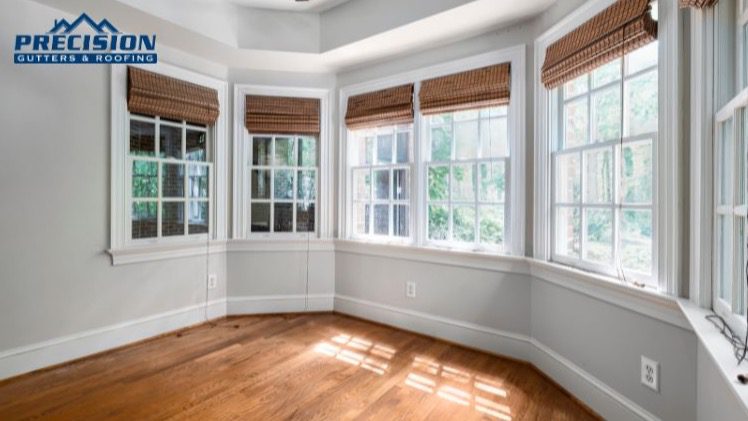
When you’re updating an older home in the downtown Coeur d’Alene area, Hayden, Post Falls, or Rathdrum, installing new windows can instantly increase your house’s comfort, enhance its curb appeal, and lower your monthly energy costs.
Idaho winters bring plenty of cold and snow, while North Idaho summers bring some serious heat spells. Accordingly, the frame material you pick matters more than it might seem at first. Quality windows help hold in heat and cut down on drafts in winter and keep heat out and cool air in in summer. Good windows should stand up to the vagaries of seasonal changes without needing constant attention.
At Precision Gutters & Roofing, we see how every part of a home’s exterior contributes to its long-term protection and performance. Choosing the right windows is one of the most impactful things you can do to preserve your dwelling’s energy efficiency and long-term value.
Vinyl Windows: Everyday Reliability
Vinyl frames have earned a strong following among homeowners who want solid performance without a lot of upkeep. The material naturally resists heat transfer, which helps keep indoor temperatures steadier through cold snaps and warm stretches alike. That built-in insulation often translates into lower heating and cooling bills over time.
Key benefits:
- Strong resistance to moisture, rot, and insects, so the frames stay intact even in damp or variable conditions.
- Very low maintenance: no painting, no rust concerns, and simple cleaning with soap and water.
- A wide selection of colors and wood-grain finishes that blend well with both traditional and updated home styles.
- Good longevity, with many quality installations lasting 30 years or more when properly installed.
- Lower upfront cost, typically 20–50% cheaper to purchase and install than comparable aluminum windows.
Challenges:
- Frames tend to be thicker than aluminum, which can reduce the amount of visible glass area slightly.
- The material expands and contracts more with big temperature changes, though reputable manufacturers build in features to handle North Idaho weather without issues.
- It offers less structural strength for very large openings or expansive glass walls.
- While the lower initial investment is attractive, vinyl windows may have a shorter lifespan in extreme climates (very hot, very cold, or coastal areas), which can lead to earlier replacement costs.
Aluminum Windows: Strength and Clean Lines
Aluminum brings a different set of strengths, especially if your home leans toward a more modern look or you want maximum views. The frames are slim and rigid, letting in more natural light while maintaining a crisp, streamlined appearance. Because aluminum is lightweight yet tough, it works well for bigger window sizes and custom designs.
Key benefits:
- Superior strength that supports larger glass panels without extra bulk or reinforcement.
- A sleek profile that suits contemporary architecture and lets you enjoy lake or mountain views with minimal frame interruption.
- Excellent durability when finished properly, often holding up for decades even with exposure to wind, snow, and sun.
- Full recyclability at the end of its service life.
- Strong long-term value due to superior strength and durability, resulting in a longer lifespan (particularly in harsh or coastal environments), which can reduce the frequency of replacement.
Challenges:
- It conducts temperature more readily than vinyl, so energy performance depends on thermal breaks or special coatings that add to the overall cost.
- Surface damage like dents or scratches can show more easily than on vinyl.
- In some climates it benefits from periodic attention to finishes, though Coeur d’Alene’s conditions are generally kinder than coastal salt air.
- Aluminum has a higher initial cost, often 30–50% more than vinyl for similar quality and performance.
How the Two Options Compare for Local Homes
Energy efficiency stands out as a major difference in our region. Vinyl’s natural insulating qualities often give it an edge for keeping heating costs reasonable through long winters. Aluminum can reach similar performance levels once thermal breaks are added, but that upgrade narrows the gap and raises the price.
Durability plays out differently, too. Aluminum’s strength shines when you need big, impact-resistant openings. Vinyl holds its own for standard residential use and resists the kind of degradation that affects some other materials.
Aesthetics usually come down to personal taste and home style. Vinyl offers more flexibility for wood-like looks that match classic North Idaho homes. Aluminum delivers the clean, minimal lines popular in newer or remodeled properties.
Upfront costs vary depending on size, features, and installation quality. Many homeowners find that vinyl delivers strong long-term value through energy savings and minimal maintenance, while aluminum can make sense when structural demands or design goals take priority.
Finding the Best Fit for Your Situation
Think about how you use the space and what matters most to you. If energy savings and low upkeep top your list, vinyl frequently comes out ahead for typical homes. If you’re after expansive views, a modern aesthetic, or need larger structural openings, aluminum may be the stronger choice.
Professional installation makes a big difference with either material. Proper sealing, accurate measurements, and quality hardware ensure the windows perform as expected and maintain their warranties.
No single option wins for every home. The right decision balances your priorities for looks, performance, and budget with the realities of our local climate. Taking time to compare real-world performance helps you end up with windows that feel like a smart, lasting upgrade.
Ready to keep improving your home’s exterior protection and efficiency? Explore the full range of services at Precision Gutters & Roofing or contact us to schedule a conversation about your next home project.