
Your home’s gutters work hard through every rainy stretch and snowy Idaho winter, quietly channeling water away from your roof, siding, and foundation. In order to do their job well, though, they must be regularly inspected.
When gutters start to struggle, the earliest clues often appear right in plain sight. Acting on those clues soon keeps small issues from turning into foundation problems, rotting fascia, or landscape washouts that cost far more to fix later. Here in Coeur d’Alene, where freeze-thaw cycles and pine needles add extra stress, a quick seasonal check pays off. The team at Precision Gutters & Roofing has seen how timely attention protects local homes year after year.
Clues Visible from the Yard
Walk around your house on a clear day and look up at the roofline. Sagging sections of your gutter that dip lower than the rest usually mean the hangers have loosened or debris weight has pulled the system out of its proper pitch. Gutters that pull away from the fascia leave a visible gap and allow water to run behind the boards instead of into the gutter trough. Rust spots or orange streaks on metal gutters signal corrosion that can open into holes. Small cracks or splits, especially near seams, expand with temperature swings and start leaking. Plants or moss sprouting over the edge tell you debris has sat long enough to create its own little garden, adding weight that stresses the whole run.
These ground-level checks take only a few minutes to do, yet reveal problems before they escalate. If a section looks uneven or stained, mark the spot so you can monitor it after the next storm.
What Rain Reveals
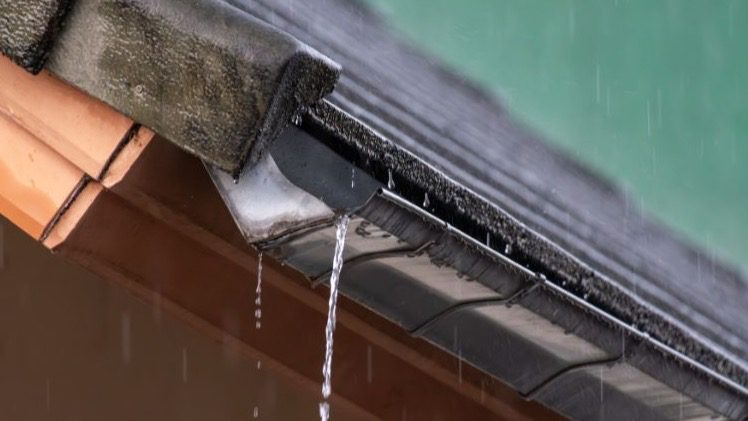
A moderate shower offers the best real-world test. Water should flow steadily toward the downspouts and exit cleanly at the bottom. When it cascades over the front edge instead, the trough is either clogged, undersized, or pitched incorrectly. Standing water that remains after the rain stops points to the same issues and slowly deforms the metal or weakens the fasteners. Watch the downspouts, too. Little or no flow from them while the gutters fill means a blockage farther along the line.
In winter, ice dams or heavy icicles along the edge often form when water cannot drain freely and freezes in place. That trapped moisture can work its way under shingles and into the attic. After the melt, check for new stains or soft spots on the fascia.
Indirect Signs Around the House
Not every warning shows up on the gutters themselves. Dark streaks or “tiger striping” on siding below the roofline show water has been spilling where it should not. Peeling or blistering paint near the eaves, soft or crumbling wood on fascia boards, and water stains on exterior walls all point to chronic overflow or leaks. Around the foundation, look for standing puddles, washed-out mulch, eroded soil, or new cracks in concrete. These patterns form when downspouts fail to carry water far enough away from the house.
Inside, damp basement walls or musty smells near exterior walls can trace back to the same drainage failures. Addressing the gutters first often solves the moisture problem at its source.
Why Early Detection Saves Trouble
Left alone, a minor sag or clog forces water against the house repeatedly. Soil gets saturated, foundations shift, and wood rot begins or spreads. Repair costs climb quickly once fascia boards or siding need replacement. Regular ground inspections twice a year — in spring after the thaw and in fall before the snow hits — plus a look after major storms can do wonders to keep the system working as designed. Cleaning out leaves and needles, tightening loose hangers, and sealing small cracks while they are still minor also extend the life of the entire setup.
If the damage looks widespread or the system is older, a professional evaluation can determine whether targeted repairs or a full upgrade makes better sense for your home.
Spotting these signs early gives you control and keeps your property dry through every season. Explore the services offered on the Precision Gutters & Roofing website to learn more about inspections, repairs, and installations tailored to Coeur d’Alene homes, or contact us to schedule an appointment and protect your investment before the next storm arrives.