
Have you ever noticed a small water stain on your ceiling after a heavy spring rain and wondered how it sneaked inside? In Coeur d’Alene, where our mix of pounding rain, heavy snow, and those dramatic freeze-thaw cycles can test any home’s defenses, the answer often lies in something many homeowners overlook: roof flashing.
Precision Gutters & Roofing is a family-owned local roofing, gutter, window, and siding company here in Hayden, Idaho. We install and repair roofs for customers in North Idaho and Eastern Washington, and we often find that many homeowners do not fully realize how essential good flashing is, and how much of the heavy lifting it does in keeping your home dry and secure.
Understanding Roof Flashing
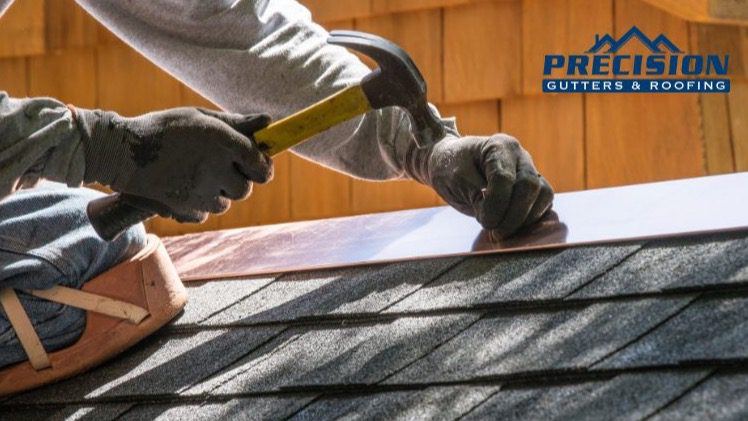
Roof flashing is made from thin sheets of durable metal, like aluminum, copper, or galvanized steel, that get shaped and tucked into the spots where different parts of your roof come together. These pieces of metal cover the joints to create a seamless pathway that guides water away instead of letting it pool or seep through. Unlike the shingles that cover broad areas, flashing handles the tricky transitions, corners, seams, and edges where water loves to collect.
The material choice matters a lot up here in North Idaho. Copper holds up beautifully against our acidic rain and snow, while aluminum offers solid value without weighing down older structures. Whatever the type, quality flashing flexes just enough with temperature swings so it doesn’t crack or pull away over time.
How Flashing Keeps Water Where It Belongs
Picture water running down your roof after a storm. Without flashing, that flow hits every joint, vent, or seam and finds a way underneath. Flashing works as a gentle redirect, channeling the water back onto the shingles or straight into your gutters. It forms a continuous shield that blocks wind-driven rain from sneaking under edges and stops melting snow from backing up into your home.
This redirection might seem simple, but it protects your entire roof system. A well-placed piece of flashing can mean the difference between a dry attic and a surprise repair bill. We often tell customers it’s the reason their roof stays reliable year after year through our long winters.
Prime Spots Where Flashing Does Its Work
You’ll find flashing working hard in several key areas around your home. Around chimneys and vent pipes where they meet the roof, it wraps snugly to stop water from dripping straight down the sides. In roof valleys where two slopes meet, it creates a smooth channel so water doesn’t linger. Skylights, dormers, and the places where your roof connects to exterior walls all need their own custom flashing pieces, too.
Even the edges along eaves and rakes get attention. Each location demands its own careful shaping and sealing so nothing slips through. When we inspect roofs here in Coeur d’Alene, these are the exact spots we check first because local weather and gravity hits them hardest.
Why Flashing Matters Extra in Coeur d’Alene
Our corner of Idaho throws some unique challenges at roofs. Heavy snow loads can shift flashing over time, and the repeated freezing and thawing cycle creates tiny gaps that grow if left alone. Add in our frequent rain and you have a perfect recipe for potential trouble. That’s why homeowners who stay ahead of flashing issues enjoy fewer emergencies and longer-lasting roofs overall.
We’ve helped plenty of local families avoid major headaches simply by catching worn flashing early. It’s one of those details that keeps your home comfortable and your wallet happy when the next big storm rolls through.
Spotting Trouble Before It Turns Costly
The good news is that flashing problems usually give clear hints before they cause big damage. Look for rust spots, small gaps, or sections that look bent or loose. Inside, you might notice ceiling stains, musty smells, or damp spots near walls. On the exterior, check for granules washing away near flashing areas or water stains running down your siding.
If you spot any of these, don’t wait for the next downpour. A quick look from a pro can save you from far more expensive repairs down the road. We always recommend pairing flashing checks with regular gutter maintenance since the two systems work hand in hand.
Simple Ways We Can Help to Protect Your Flashing
Keeping flashing in great shape doesn’t require daily effort. Twice a year — once in spring and again in fall — take a safe look from the ground or schedule a professional inspection. Clear away leaves and debris that might trap moisture against the metal. Trim back overhanging branches so they don’t rub or drop extra weight during snow season.
When it’s time for a full roof replacement, we suggest replacing the flashing at the same time. It’s the most cost-effective way to give your home fresh, reliable protection that matches the new shingles perfectly.
Your roof works hard every day to keep you dry and comfortable. Giving flashing the attention it deserves is one of the smartest moves any homeowner can make. If you’re curious about the condition of your own roof or want to learn more about how we handle these details, look over our website to explore our full range of services. Or call Precision Gutters & Roofing today to schedule an appointment. We’d love to help keep your Coeur d’Alene home safe and dry for years to come.