When homeowners in Coeur d’Alene come in to talk to us about a new roof, the conversation almost always lands on shingles first. Color, style, durability — those visible details grab attention for good reason. Yet the material that sits quietly underneath those shingles carries an equal part of the burden of keeping your home dry and protected for decades.
At Precision Gutters & Roofing, we see the consequences of neglecting this essential element every day: the best-looking roof can still fail early if the underlayment is skimpy or poorly chosen. Underlayment is the protective layer rolled out across the roof deck before any shingles go on. Once the job is finished, no one ever sees it again. That invisibility is exactly why so many people overlook it — until water finds its way inside and begins to damage your home.
What Underlayment Actually Does
Picture the underlayment as the quiet backup that steps in when the star player takes a hit. Wind can lift a few shingles. A falling branch can crack one. Ice can form along the eaves and push meltwater backward under the edges. In each of those moments, the underlayment is the barrier that stops moisture from soaking into the plywood or OSB decking. Without it, that water can lead to warped boards, mold in the attic, and stained ceilings downstairs.
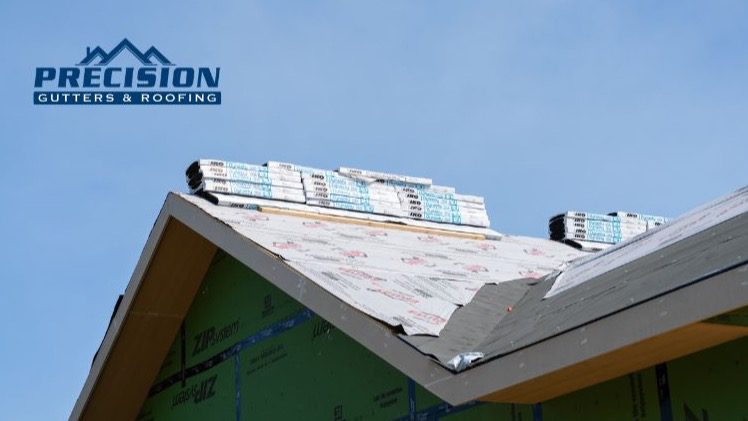
It also serves a practical purpose during the roofing process itself. After the old shingles come off, the bare deck sits exposed. A sudden Idaho rain shower or a stretch of bright sun can damage the wood. Quality underlayment acts as temporary cover so the crew can finish the job without racing the weather.
Building codes require underlayment for a reason, and most shingle manufacturers make it a condition of their warranties. Skip the right material or install it carelessly, and you may lose both code compliance and long-term coverage.
The Main Types of Underlayment You’ll Encounter
Traditional asphalt-saturated felt has been around for generations. It comes in lighter and heavier weights and still works in milder conditions. The downside is that it can tear more easily under foot traffic, absorbs moisture if left exposed, and breaks down faster under heat or ultraviolet light.
Synthetic underlayment has become the preferred choice for most professional installations. Made from tough polymer fabrics, it resists tearing, sheds water more effectively, is lighter to handle, and holds up far better when left uncovered for longer periods. Many versions also offer better traction, which keeps installers safer on steep slopes.
Self-adhered membranes, often called ice-and-water shields, take protection a step further. These peel-and-stick products create a watertight seal directly on the roof deck. They are especially valuable along eaves, in valleys, and around penetrations such as vents or chimneys — all the places where water likes to collect. In a climate that sees heavy snow and freeze-thaw cycles, this layer can prevent the classic ice-dam headache that forces water under the shingles and into the house.
Why North Idaho and Eastern Washington Homes Need Thoughtful Choices
Inland Northwest winters bring snow loads and temperature swings that test every part of a roofing system. Ice dams form when heat escapes through the attic and melts snow, only for the water to refreeze at the colder eaves on the border of the roof and accumulate snow and ice. A continuous strip of ice-and-water shield in those critical zones gives the roof a far better chance of staying leak-free. Synthetic underlayment across the rest of the surface adds tear resistance against high winds that sometimes accompany the region’s storms.
Choosing the right combination also protects the investment you make in premium shingles. The two layers work as a team; one without the other leaves gaps in performance.
Installation Makes the Difference: Rely on Precision Gutters & Roofing
Even the highest-rated underlayment can underperform if seams are too narrow, fasteners are placed carelessly, or wrinkles create pockets where water can sit. Proper overlaps, correct fastening patterns, and careful detailing around every penetration turn good material into reliable protection. That is why experienced crews pay as much attention to the hidden layer as they do to the finished surface.
A solid underlayment package does more than stop leaks. It helps the entire roof last longer, supports the shingle warranty, and gives you quieter confidence when the next weather system rolls through the region.
If you are planning a roof replacement or simply want to know how your current system is holding up, explore the full range of services we offer. When you are ready to talk specifics for your home, contact Precision Gutters & Roofing to schedule a convenient time to walk through your options.